

What’s brewing in October?
October is a month to celebrate, connect, and continue building momentum. As we recognize Head Start Awareness Month, it’s a great time to celebrate the difference Head Start programs make every day while continuing to focus on the children, families, and communities at the heart of the work.
From strengthening family partnerships and supporting health and safety to recognizing the dedicated staff who make it all possible, there’s plenty happening this month.
Let’s take a look at what’s brewing in October and explore timely reminders, helpful resources, best practices, upcoming learning opportunities, and the latest updates in GoEngage.
October Program Check-In: What Is Your Data Telling You?
Platform: Head Start
The program year is underway. Children are attending, families are engaging, screenings are being completed, and staff are settling into their routines.
Now is a great time to take a step back and ask: What is your data telling you?
The first several weeks of the program year can reveal missing information, emerging attendance patterns, overdue requirements, family needs, and processes that may not be working quite as expected.
A quick October check-in can help your team identify those issues early—while there is still plenty of time to address them.
 | Review Attendance PatternsDon't wait until attendance becomes a significant concern to take action. Review individual and program-level attendance and look for:
When concerns are identified, make sure outreach, family conversations, strategies, and follow-up are documented. GoEngage Resources: |
 | Check Health Requirements & ScreeningsBy October, your team should have a clearer picture of outstanding health requirements and screenings. Take time to review:
Catching missing information early can prevent a much larger cleanup later in the program year. GoEngage Resources: |
 | Look at Family Needs & ReferralsThe beginning of the year often brings a significant amount of new information from applications, family assessments, conversations, and digital forms. Don't let that information simply become documentation. Review:
Ask yourself: When a family tells us they need help, do we have a process that makes sure someone follows up? GoEngage Resources: |
 | Review Missing & Incomplete InformationA few missing fields in September can turn into a much bigger data cleanup later. Look for:
This is also a good opportunity to determine why information is missing. Is additional staff training needed? Is a process unclear? Could a form, alert, report, or automation make the process easier? GoEngage Resources: |
 | Check Your Alerts & AutomationsNow that staff have been using your processes for several weeks, review whether your GoEngage alerts and automations are working the way you intended. Consider:
The goal isn't to create more notifications—it's to make sure the right information reaches the right person at the right time. GoEngage Resources: |
 | Ask Your Staff What's Working—and What Isn'tYour data tells part of the story. Your staff can tell you the rest. Ask your team:
Their answers may uncover opportunities to simplify workflows, improve configuration, provide additional training, or use features your agency isn't currently taking advantage of. |


During the session, you'll get a look inside GoEngage and see how it can help agencies simplify everyday workflows, connect information, strengthen reporting and compliance, and bring more of their work together in one place.
Pick the Date That Works for You
We offer multiple Sneak Peek sessions so you can choose the date that works best for your schedule. Each session covers the same information, so you only need to attend one—but you're welcome to join us again anytime.
🕑 All sessions begin at 2:00 PM ET.
📅 CHOOSE YOUR SESSION & REGISTER

October Awareness Spotlight: Supporting Children, Families & Communities
October brings several important opportunities to strengthen awareness, connect families with resources, and recognize the work Head Start and Community Action agencies do every day to support the health, safety, stability, and well-being of children and families.
Head Start Awareness Month
Platform: Head Start
October is Head Start Awareness Month—a time to celebrate the impact Head Start and Early Head Start programs have on children, families, and communities and recognize the dedicated professionals who make that impact possible.
 | Celebrating Head Start with GoEngageFor more than 60 years, Head Start has provided comprehensive services designed to support not only children's learning and development, but their health, nutrition, family relationships, and overall well-being. |
Head Start Awareness Month is an opportunity to celebrate that comprehensive approach while also reflecting on how programs can continue strengthening services for children and families.
This is a great time to:
Celebrate the contributions of your Head Start and Early Head Start staff.
Share success stories that demonstrate the impact your program is having on children and families.
Recognize parents and families as important partners in children's development and learning.
Highlight community partnerships that help families access additional services and resources.
Review program goals and progress toward desired outcomes.
Recognize staff members who go above and beyond for children and families.
Help your community better understand the comprehensive services Head Start provides.
GoEngage Spotlight:
GoEngage is proud to support Head Start and Early Head Start agencies in the important work they do every day. By bringing information together across program areas, GoEngage helps agencies see the whole child and family while reducing administrative work. With GoEngage, your team can:
Manage enrollment, eligibility, selection, attendance, and enrollment requirements.
Track health, nutrition, disability, mental health, education, and family services.
Engage families through digital forms, text messages, email, announcements, and the Parent Portal.
Document family goals, needs, services, referrals, and follow-up.
Monitor compliance requirements, deadlines, and missing information.
Use alerts and automations to help staff identify items requiring attention.
Give leadership greater visibility into program data through reports and dashboards.
Maintain documentation that demonstrates the comprehensive services being provided to children and families.
Celebrate the Impact
Head Start Awareness Month is an opportunity to recognize the people behind the program—the teachers, family advocates, health staff, managers, administrators, parents, community partners, and countless others working together to help children and families thrive.
Thank you for everything you do!
Breast Cancer Awareness Month
Platform: Head Start & CAP
October is Breast Cancer Awareness Month, an opportunity to raise awareness about breast cancer, encourage preventive care and early detection, and support individuals and families affected by the disease.
 | Breast Cancer Awareness and the Families We ServeA serious health diagnosis can affect much more than an individual's physical health. Families may experience changes in employment, income, transportation, childcare needs, emotional well-being, and other areas of daily life. |
Organizations serving children and families can play an important role by helping families identify needs and connect with available community resources.
This is a great time to:
Share reliable breast cancer education and screening resources with staff and families.
Encourage individuals to talk with their healthcare providers about appropriate screenings and individual risk factors.
Review community healthcare and support resources available to families.
Consider how a serious illness can affect the needs of the entire household.
Make sure staff know how to document family needs and connect families with available resources.
Promote a workplace culture that supports employees and families experiencing serious health challenges.
GoEngage Spotlight:
When families experience a health challenge, their needs may extend across multiple areas. GoEngage can help agencies:
Document family needs and changing circumstances.
Connect families with community services and resources.
Track referrals and follow-up activities.
Document services provided to families.
Maintain a history of family contacts and support.
Help staff see needs across multiple areas of a family's life.
Awareness Can Lead to Action
Breast Cancer Awareness Month is an opportunity not only to raise awareness, but also to remind families and staff of the importance of preventive healthcare, reliable information, and knowing where to turn when additional support is needed.
Domestic Violence Awareness Month
Platform: Head Start & CAP
October is Domestic Violence Awareness Month, a time to raise awareness about domestic violence, recognize its impact on adults and children, and connect individuals and families with appropriate resources and support.
 | Supporting Families with Safety and SensitivityDomestic violence can affect many aspects of family well-being, including physical and mental health, housing stability, employment, finances, transportation, and children's social-emotional well-being. |
Families experiencing domestic violence may need different types of support at different times. Agencies should ensure their approach prioritizes safety, confidentiality, respectful communication, and connection with professionals trained to provide specialized assistance.
This is a great time to:
Review your agency's policies and procedures related to domestic violence and family safety.
Make sure staff understand how to respond appropriately when a family shares a safety concern.
Review confidentiality and information-sharing practices.
Update information about local domestic violence programs, shelters, hotlines, legal assistance, and other resources.
Remind staff of appropriate referral and follow-up procedures.
Review how sensitive family information is documented and who should have access to it.
Strengthen partnerships with organizations specializing in domestic violence services.
GoEngage Spotlight:
GoEngage can help agencies coordinate family services and maintain important documentation while supporting established agency procedures. Teams can:
Document identified family needs.
Maintain referral and community resource information.
Track referrals and follow-up activities.
Document services and assistance provided.
Maintain family contact and case information.
Coordinate services across appropriate program areas.
Use permissions and access controls to help protect sensitive information.
Connection Matters
Staff do not have to solve every challenge a family faces. Sometimes the most important step is recognizing a need and helping connect a family with the right professional or community resource.
National Health Literacy Month
Platform: Head Start & CAP
October is Health Literacy Month, an opportunity to recognize the importance of making health information understandable, accessible, and useful so individuals and families can make informed decisions about their health.
 | Helping Families Understand Health InformationFamilies regularly receive information about screenings, immunizations, developmental concerns, nutrition, medications, referrals, appointments, and other health-related needs. Information is most useful when families can understand what it means, why it matters, and what they need to do next. |
Health literacy isn't simply about providing information. It is about communicating information in a way that helps people understand and use it.
This is a great time to:
Review health communications and forms for clear, family-friendly language.
Avoid unnecessary medical terminology and acronyms when communicating with families.
Review translated materials to help ensure families receive information in a language they understand.
Make instructions and next steps easy to identify.
Encourage families to ask questions about health information they do not understand.
Review how staff communicate health screening results and follow-up needs.
Make sure families know where to find reliable health information and resources.
GoEngage Spotlight:
GoEngage helps agencies organize health information and communicate with families throughout the process. With GoEngage, teams can:
Track child health requirements, screenings, and follow-up.
Monitor upcoming and overdue health requirements.
Document health services and results.
Maintain health-related digital forms and family-provided information.
Communicate with families through text, email, announcements, and the Parent Portal.
Use digital forms to gather information directly from families.
Maintain health documentation as part of the child's comprehensive record.
Use alerts and reporting to help staff identify health items requiring attention.
Make Information Easier to Use
Health Literacy Month is a good opportunity to look at your agency's communications from a family's perspective. Ask: Is this information easy to understand? Does the family know why it matters? And is it clear what they should do next?
Energy Awareness Month
Platform: Head Start & CAP
October is Energy Awareness Month, an opportunity to promote energy conservation and efficiency while also recognizing the impact energy costs and utility needs can have on household stability.
 | Energy Awareness and Family StabilityFor families struggling to meet basic needs, a high utility bill or loss of service can quickly become a crisis. Utility costs can compete with other essential household expenses such as food, housing, transportation, healthcare, and childcare. |
Head Start and Community Action agencies can help families identify needs and connect with available assistance and community resources. Reliable access to electricity, heating, cooling, and other utilities affects far more than household comfort. It can influence food safety, children's health, the ability to prepare meals, maintain safe indoor temperatures, complete daily routines, and remain safely housed.
This is a great time to:
Share energy-saving tips and resources with families.
Review utility assistance programs available in your community.
Make sure staff know how to connect families with energy assistance resources.
Review how your agency identifies and documents utility-related needs.
Identify families who may be at risk of utility disconnection.
Share information about weatherization and energy-efficiency programs.
Review referral relationships with local utility assistance providers.
Consider how utility challenges may be connected to other household needs.
GoEngage Spotlight:
GoEngage helps Head Start and Community Action agencies identify family and household needs and coordinate available services. With GoEngage, teams can:
Document utility and household needs identified through assessments and conversations with families.
Track services, benefits, and assistance provided.
Connect families with available programs and community resources.
Document referrals and follow-up activities.
Track needs across different areas of the household.
Maintain a history of services provided to help staff understand previous assistance.
Use reports and dashboards to identify trends in family and community needs.
Help teams coordinate services when families are experiencing multiple, interconnected challenges.
Look Beyond the Utility Bill
A utility need may be an indicator of a larger challenge affecting the household. Energy Awareness Month is a good opportunity to remind teams to look beyond the immediate request and consider whether a family may benefit from additional resources related to housing, food, employment, transportation, healthcare, or other essential needs.
GoEngage: More Than Software
The best outcomes happen when technology, people, and processes work together.
Whether you're preparing for a federal review, strengthening family engagement, improving safety practices, or looking for more efficient workflows, our team is here to help you get the most out of GoEngage.
Already using GoEngage?
Our Training and Consulting teams can help you:
Increase staff confidence
Improve adoption of GoEngage features
Streamline workflows
Support continuous quality improvement
➡️ Request Training Information➡️ Request Consulting Information
Training@GoEngage.app | Consulting@GoEngage.app
(800) 473-4780
Not using GoEngage?
See how an all-in-one Head Start data management solution can help your program reduce administrative burden, strengthen compliance, and give your team more time to focus on what matters most—children and families.
➡️ Request a Personalized Demo | Sales@GoEngage.app
(800) 473-4780
 |
Digital forms make it easier to collect information from families—but collecting the information is only the beginning. Think about the forms your agency uses throughout the year: Health Histories, Family Needs Assessments, applications, nutrition assessments, enrollment forms, parent questionnaires, and more.
Families may be telling you something through those forms that requires action.
For example:
A parent reports that their child has a severe food allergy on a Health History.
A family indicates they are worried about losing their housing on a Family Needs Assessment.
A parent shares that they are experiencing transportation challenges that could affect their child's attendance.
A family indicates they are having difficulty accessing food, utilities, healthcare, or other basic needs.
A response identifies a concern that should be reviewed by a Health Manager, Family Services Manager, or another member of your team.
The important question is: What happens after the family submits the form?
Build the Follow-Up Into Your Process
Take some time to review your agency's digital forms and identify questions or responses that should result in additional action.
For each one, consider:
WHO needs to know?
WHAT needs to happen next?
HOW will that person know action is needed?
WHERE will the follow-up be documented?
WHEN should the follow-up be completed?
Rather than relying on someone to remember to review every response manually, let GoEngage help build the next step into your workflow.
GoEngage Spotlight: Turn Responses Into Action
GoEngage can help agencies create workflows so important information doesn't simply sit on a completed form.
Depending on your agency's process, a response can be used to help staff identify when additional attention or follow-up may be needed.
For example: Family answers a question → Need is identified → Appropriate staff are alerted → Follow-up occurs → Action is documented
Your agency can use tools such as internal referral notes or to-do notes to help make sure important information reaches the appropriate team members.
Start with Your Most Important Forms
You don't have to review everything at once. Choose one high-impact form—such as your Health History or Family Needs Assessment—and ask: “Which answers on this form should cause something else to happen?”
Then work through those responses one by one. A digital form shouldn't just replace a paper form. The real opportunity is using the information families provide to help your team know what to do next.
Did you know that information collected on a digital form can help your team identify when follow-up may be needed?
For example, if a family indicates on a form that their child has a severe allergy or that they are experiencing a need such as housing instability, your agency can establish processes in GoEngage to help bring that information to the attention of the appropriate staff.
Using tools such as internal referral notes and to-do notes, your team can create a clearer path from:
Family Response → Staff Awareness → Follow-Up → Documentation
It's one more way GoEngage can help your agency move beyond simply collecting information and use your data to support action.
Try This
Choose one of your agency's most frequently used digital forms and review the questions.
Ask your team: “Are there any answers on this form that we would want someone to know about or act on right away?” If the answer is yes, consider whether you can build that follow-up into your GoEngage process.
PIR reporting may feel far away, but the data that will become your PIR is being collected right now. Waiting until the end of the program year to review PIR data can mean discovering missing information, unexpected numbers, or documentation issues when there is little time left to correct them. Instead, make PIR review an ongoing process throughout the program year.
 | Start Now with My PIR: Make PIR a Team EffortDid you know GoEngage's My PIR feature allows agencies to assign specific PIR questions to managers and staff? Instead of placing the responsibility for reviewing the entire PIR on one person at the end of the year, agencies can divide responsibility among the people who know each content area best. |
Each group only sees data that falls within its assigned organizational access, helping agencies distribute PIR review while maintaining appropriate access to program information. Once My PIR is configured, encourage your managers to make reviewing their assigned PIR questions part of their regular routine.
Consider establishing a simple process: Assign → Review → Investigate → Correct → Monitor
For example, your Health Manager can regularly review health-related PIR questions, while other managers monitor the questions associated with their areas of responsibility.
This allows your team to:
Review PIR data throughout the year.
Give managers ownership of the data related to their content areas.
Identify missing or unexpected information earlier.
Correct documentation or data-entry issues while the information is still fresh.
Identify areas where staff may need additional training.
Reduce the year-end PIR scramble.
Don't Just Look for Missing Data
Data quality isn't only about finding blank fields. As managers review their PIR questions, encourage them to ask:
Does this number make sense?
Is anything unexpectedly zero?
Is this number significantly higher or lower than we expected?
Are services we know we're providing showing up in our data?
Does the data reflect what is actually happening in our program?
If something doesn't look right, investigate it now.
The issue could be missing documentation, inconsistent data entry, a process staff don't fully understand, or simply something that needs further review.
Finding it in October gives your team time to understand and address it. Finding it during PIR submission is a very different experience.
Don't Wait Until the End
PIR shouldn't be something your agency looks at for the first time at the end of the school year.
Set up My PIR early. Assign responsibility. Review the data regularly. Ask questions when something doesn't look right.
A little attention throughout the year can make a big difference when PIR season arrives.

Save the Date: GoEngage Connect 2028
📅 Week of February 28, 2028
📍 San Antonio, Texas
GoEngage Connect is designed for Head Start leaders who want practical strategies, meaningful networking opportunities, hands-on learning, and direct access to the GoEngage team.
From compliance and reporting to family engagement, ERSEA, education, health, and operational best practices — Connect is all about helping agencies learn from one another and grow together.
More details, registration information, and session announcements will be shared in the future, but we wanted our GoEngage community to be the first to know.
👉 Join the interest list to receive future updates, announcements, and early registration details.
We can’t wait to see you again in 2028!
Cross-Program Collaboration: Better Together
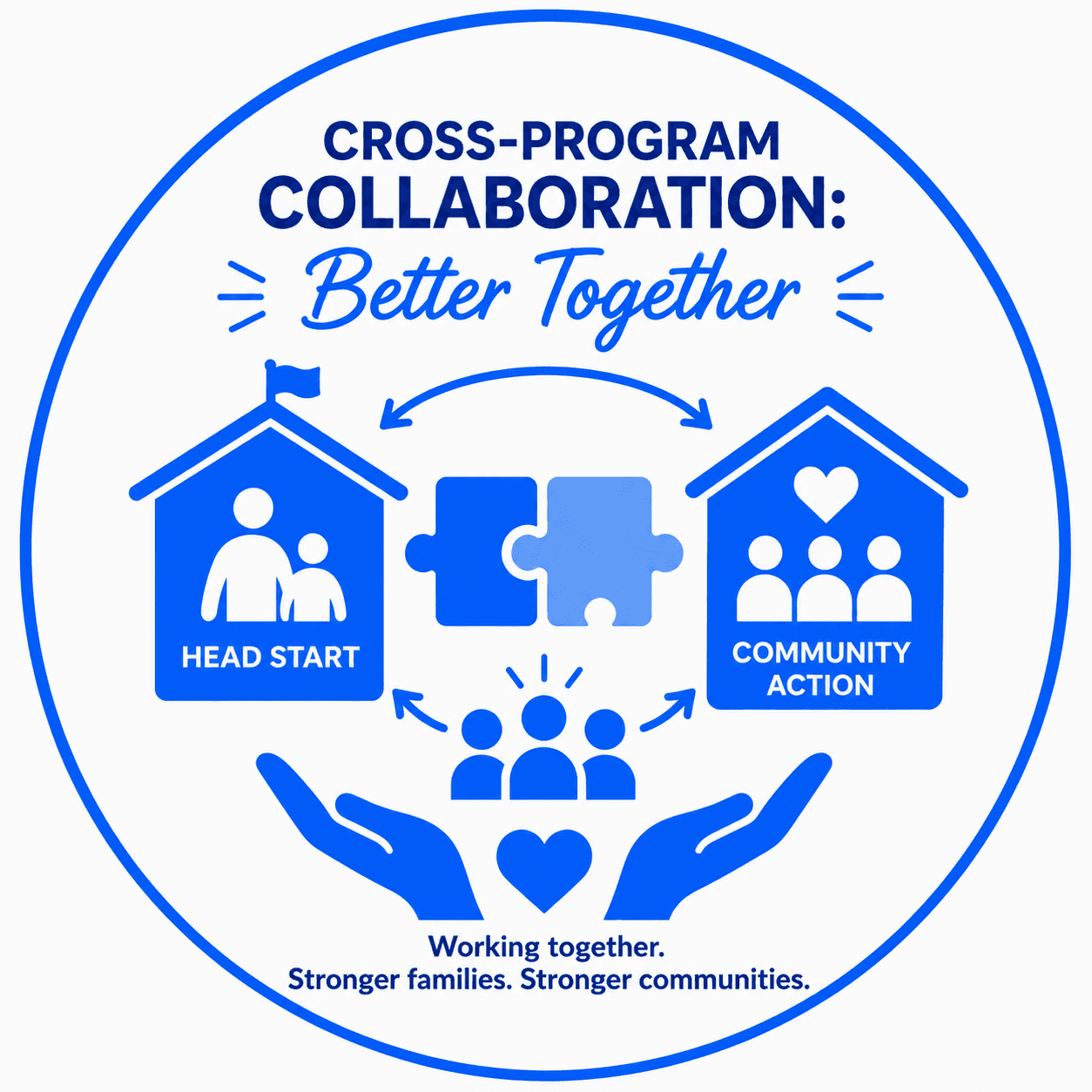 | Many organizations operate both Head Start and Community Action programs. GoEngage makes it easier to:
When departments work together, families receive better support. |
GoEngage Success Services
Platform: Head Start & CAP
Maximize your investment in GoEngage
Your GoEngage subscription is just the beginning. Our Success Services are designed to help your agency maximize its investment, strengthen program operations, and build confidence every step of the way.
Every agency is different, every training and consulting plan is designed specifically for your program.
Explore GoEngage Success Services
Our priority is your success
From annual reporting and federal reviews to DRS support and ongoing program optimization, we're committed to helping your agency succeed every step of the way.
Resource Drop
 |  |  |
 |  |  |
Not Using GoEngage? We'd love to show you around.
Clearer data, faster follow-ups, and less time tracking things manually — GoEngage helps your team stay focused on what matters most: serving children and families.
💙 Here for You Every Step of the Way
October is a time to celebrate the incredible work happening across Head Start programs—and to keep building on the momentum of the new program year. As your team settles into routines, GoEngage is here to help you work smarter, stay proactive, and turn your data into action.
Each month, we'll continue bringing you practical tips, best practices, product updates, training opportunities, and resources to support your team and the families you serve. Thank you for everything you do to make a difference in the lives of children and families. We're proud to be part of your journey.
See you in November! 🍂
— The GoEngage Team