Beyond the Classroom: The Many Ways Head Start Changes Lives
October is Head Start Awareness Month—a time to celebrate the children, families, educators, and communities whose lives are strengthened through the power of Head Start.
When people think about Head Start, they often picture a classroom filled with curious young learners, colorful artwork, and dedicated teachers helping children prepare for kindergarten.
And while early childhood education is at the heart of Head Start, the program's impact extends far beyond the classroom.
For more than 60 years, Head Start has helped children and families build stronger foundations for the future. Through a comprehensive approach that combines early learning, health, nutrition, family engagement, and community partnerships, Head Start recognizes an important truth: Children thrive when their families thrive.
This October, as we celebrate Head Start Awareness Month, we're recognizing the many ways Head Start makes a difference—not just in preparing children for school, but in helping families and communities grow stronger.
1. Building Strong Foundations for Lifelong Learning
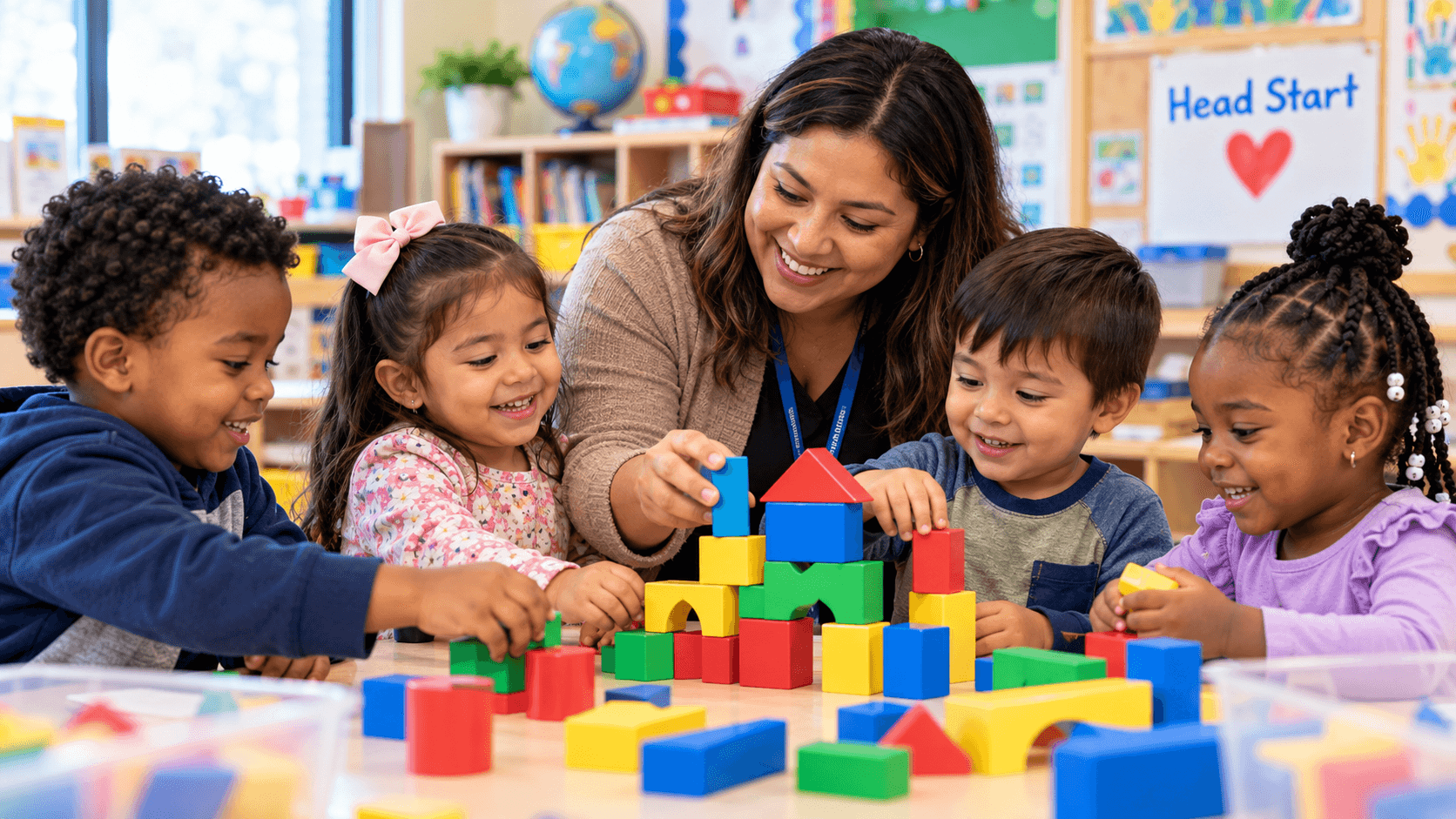
Every child deserves the opportunity to enter kindergarten feeling confident, curious, and ready to learn. Head Start provides nurturing learning environments where children develop essential skills through play, exploration, meaningful relationships, and developmentally appropriate experiences.
1. Building Strong Foundations for Lifelong Learning
Every child deserves the opportunity to enter kindergarten feeling confident, curious, and ready to learn. Head Start provides nurturing learning environments where children develop essential skills through play, exploration, meaningful relationships, and developmentally appropriate experiences.
1. Building Strong Foundations for Lifelong Learning
Every child deserves the opportunity to enter kindergarten feeling confident, curious, and ready to learn. Head Start provides nurturing learning environments where children develop essential skills through play, exploration, meaningful relationships, and developmentally appropriate experiences.
1. Building Strong Foundations for Lifelong Learning
Every child deserves the opportunity to enter kindergarten feeling confident, curious, and ready to learn. Head Start provides nurturing learning environments where children develop essential skills through play, exploration, meaningful relationships, and developmentally appropriate experiences.
But school readiness is about much more than recognizing letters, counting numbers, or learning shapes. It's also about helping children:
Build positive relationships with peers and adults
Develop social and emotional skills
Strengthen communication and language abilities
Practice problem-solving and critical thinking
Build independence, confidence, and resilience
Discover the joy of learning
Head Start educators understand that every child develops at their own pace. By recognizing each child's strengths, interests, culture, language, and individual needs, they create opportunities for every learner to succeed.
The impact: Children gain more than academic skills. They develop the confidence, relationships, and foundational abilities that support continued learning and development.
2. Supporting Children's Health and Well-Being
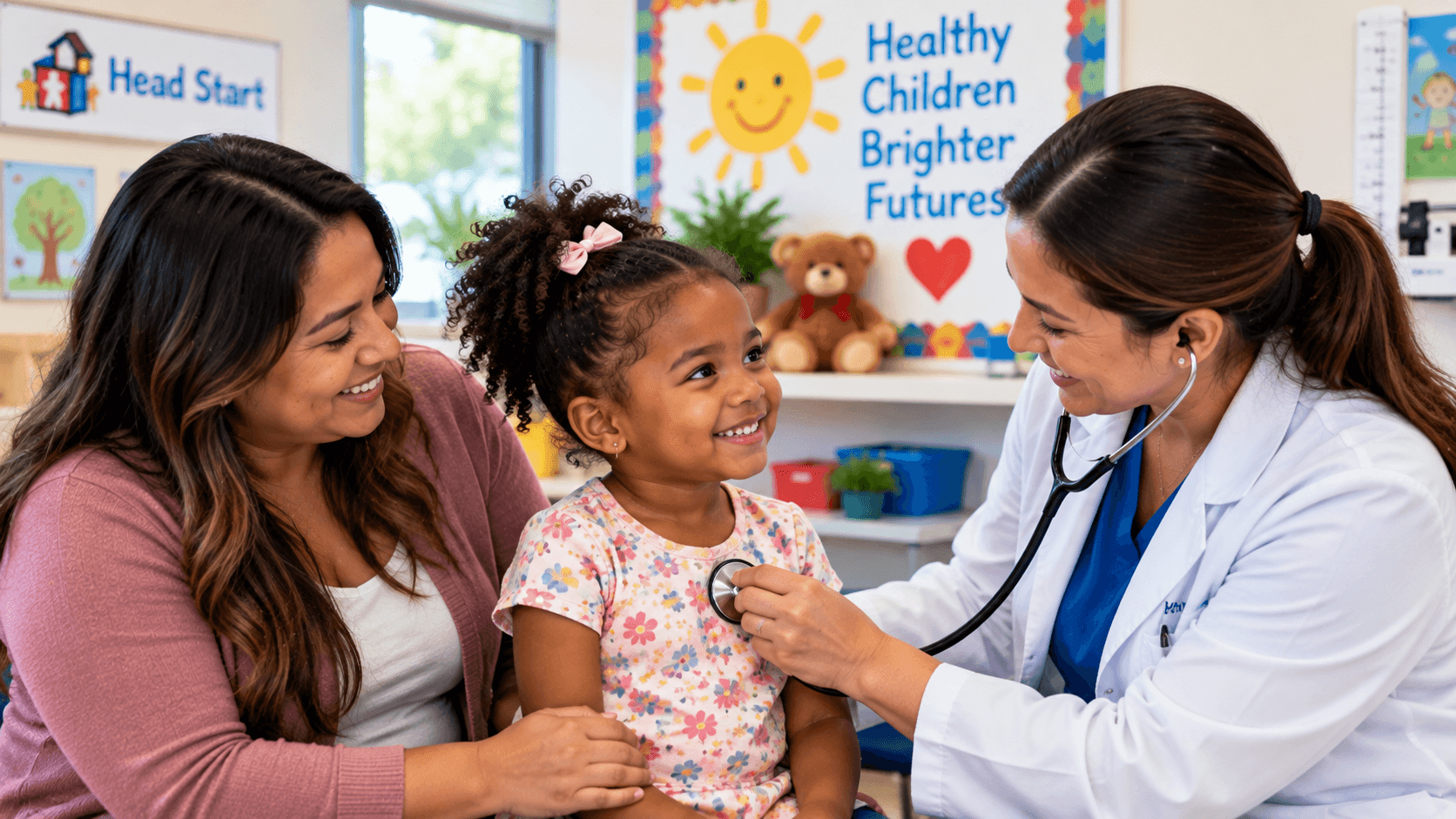
A child who is struggling with an untreated health concern, vision difficulty, or nutritional need may face additional challenges in the classroom. That's why Head Start takes a comprehensive approach to children's health and well-being.
Head Start programs work closely with families and community partners to help children access important services, including:
2. Supporting Children's Health and Well-Being
A child who is struggling with an untreated health concern, vision difficulty, or nutritional need may face additional challenges in the classroom. That's why Head Start takes a comprehensive approach to children's health and well-being.
Head Start programs work closely with families and community partners to help children access important services, including:
2. Supporting Children's Health and Well-Being
A child who is struggling with an untreated health concern, vision difficulty, or nutritional need may face additional challenges in the classroom. That's why Head Start takes a comprehensive approach to children's health and well-being.
Head Start programs work closely with families and community partners to help children access important services, including:
2. Supporting Children's Health and Well-Being
A child who is struggling with an untreated health concern, vision difficulty, or nutritional need may face additional challenges in the classroom. That's why Head Start takes a comprehensive approach to children's health and well-being.
Head Start programs work closely with families and community partners to help children access important services, including:
Preventive medical and dental care
Vision and hearing screenings
Developmental and behavioral screenings
Nutritious meals and nutrition education
Mental health and social-emotional support
Disability services and individualized support when needed
These services help identify potential concerns early, connect families with resources, and reduce barriers that could interfere with a child's learning and development. For some families, Head Start may be the connection that helps them establish a medical home, access a needed specialist, or better understand their child's developmental needs.
The impact: By supporting children's physical, developmental, and emotional well-being, Head Start helps create the conditions children need to learn, participate, and thrive.
3. Empowering Parents and Strengthening Families
One of the most powerful aspects of Head Start is its recognition that parents and caregivers are their children's first and most important teachers. Rather than focusing exclusively on the child, Head Start builds partnerships with families to understand their strengths, priorities, and goals.
3. Empowering Parents and Strengthening Families
One of the most powerful aspects of Head Start is its recognition that parents and caregivers are their children's first and most important teachers. Rather than focusing exclusively on the child, Head Start builds partnerships with families to understand their strengths, priorities, and goals.
3. Empowering Parents and Strengthening Families
One of the most powerful aspects of Head Start is its recognition that parents and caregivers are their children's first and most important teachers. Rather than focusing exclusively on the child, Head Start builds partnerships with families to understand their strengths, priorities, and goals.
3. Empowering Parents and Strengthening Families
One of the most powerful aspects of Head Start is its recognition that parents and caregivers are their children's first and most important teachers. Rather than focusing exclusively on the child, Head Start builds partnerships with families to understand their strengths, priorities, and goals.
Family services staff work alongside parents and caregivers to identify opportunities, address challenges, and connect with resources that support family well-being.
Depending on each family's circumstances, this might include assistance with:
Setting and achieving family goals
Accessing education or job training opportunities
Finding housing, food, or transportation resources
Strengthening parenting skills and family relationships
Navigating community services and support systems
Building confidence as advocates for their children
These partnerships are built on trust, respect, and the understanding that families are experts on their own experiences. Sometimes the impact is immediate, such as helping a family access an essential resource. Other times, it unfolds over months or years as parents pursue education, develop new skills, or achieve greater stability.
The impact: When families have the tools, resources, and support to work toward their goals, the benefits can extend well beyond a child's time in Head Start.
4. Creating Opportunities for Children of All Abilities
Every child deserves to feel included, supported, and valued. Head Start plays an important role in identifying developmental concerns, supporting children with disabilities, and helping families access appropriate services. Through developmental screenings, ongoing assessment, individualized planning, and collaboration with specialists, programs work to ensure children receive support that reflects their unique needs.
4. Creating Opportunities for Children of All Abilities
Every child deserves to feel included, supported, and valued. Head Start plays an important role in identifying developmental concerns, supporting children with disabilities, and helping families access appropriate services. Through developmental screenings, ongoing assessment, individualized planning, and collaboration with specialists, programs work to ensure children receive support that reflects their unique needs.
4. Creating Opportunities for Children of All Abilities
Every child deserves to feel included, supported, and valued. Head Start plays an important role in identifying developmental concerns, supporting children with disabilities, and helping families access appropriate services. Through developmental screenings, ongoing assessment, individualized planning, and collaboration with specialists, programs work to ensure children receive support that reflects their unique needs.
4. Creating Opportunities for Children of All Abilities
Every child deserves to feel included, supported, and valued. Head Start plays an important role in identifying developmental concerns, supporting children with disabilities, and helping families access appropriate services. Through developmental screenings, ongoing assessment, individualized planning, and collaboration with specialists, programs work to ensure children receive support that reflects their unique needs.
Equally important, Head Start promotes inclusive learning environments where children with and without disabilities can learn, play, and build relationships together. These experiences benefit everyone.
Children develop empathy, understanding, and respect for individual differences. Families gain support in navigating services and advocating for their children's needs. Educators have opportunities to collaborate and adapt learning experiences so more children can participate meaningfully.
The impact: Inclusive early childhood experiences help children build a sense of belonging while supporting their individual growth and development.
5. Strengthening Communities Through Meaningful Partnerships
Head Start's influence reaches beyond the children and families enrolled in its programs.
Across the country, Head Start agencies collaborate with schools, healthcare providers, local businesses, community organizations, and social service agencies to create stronger networks of support.
5. Strengthening Communities Through Meaningful Partnerships
Head Start's influence reaches beyond the children and families enrolled in its programs.
Across the country, Head Start agencies collaborate with schools, healthcare providers, local businesses, community organizations, and social service agencies to create stronger networks of support.
5. Strengthening Communities Through Meaningful Partnerships
Head Start's influence reaches beyond the children and families enrolled in its programs.
Across the country, Head Start agencies collaborate with schools, healthcare providers, local businesses, community organizations, and social service agencies to create stronger networks of support.
5. Strengthening Communities Through Meaningful Partnerships
Head Start's influence reaches beyond the children and families enrolled in its programs.
Across the country, Head Start agencies collaborate with schools, healthcare providers, local businesses, community organizations, and social service agencies to create stronger networks of support.
These partnerships help connect families with resources that no single organization could provide alone.
A healthcare provider may help a child receive needed treatment. A local organization may assist a family experiencing housing instability. A school district may collaborate with Head Start staff to support a child's transition into kindergarten. Each partnership contributes to a larger network of care.
Head Start programs also serve as employers, community partners, and advocates for early childhood education, contributing to the strength of the communities they serve.
The impact: By bringing people, services, and organizations together, Head Start helps create communities where children and families have greater opportunities to succeed.
6. Making a Difference Through Everyday Moments
Not every meaningful Head Start success can be captured in a report or measured by a number. Sometimes, the most important moments are the smallest.
It's the child who finally feels comfortable joining a group activity.
The parent who gains the confidence to speak up during a meeting about their child's development.
6. Making a Difference Through Everyday Moments
Not every meaningful Head Start success can be captured in a report or measured by a number. Sometimes, the most important moments are the smallest.
It's the child who finally feels comfortable joining a group activity.
The parent who gains the confidence to speak up during a meeting about their child's development.
6. Making a Difference Through Everyday Moments
Not every meaningful Head Start success can be captured in a report or measured by a number. Sometimes, the most important moments are the smallest.
It's the child who finally feels comfortable joining a group activity.
The parent who gains the confidence to speak up during a meeting about their child's development.
6. Making a Difference Through Everyday Moments
Not every meaningful Head Start success can be captured in a report or measured by a number. Sometimes, the most important moments are the smallest.
It's the child who finally feels comfortable joining a group activity.
The parent who gains the confidence to speak up during a meeting about their child's development.
The family advocate who helps a parent connect with a resource during a difficult time.
The teacher who recognizes that a child's challenging behavior may be a sign that additional support is needed.
The health manager who follows up until a child receives an important screening.
Or the enrollment specialist who helps a family navigate the application process so their child can access services.
These moments happen every day in Head Start programs across the country. Behind each one is a dedicated professional who understands that their work is about more than completing a task or meeting a requirement. It's about making a difference in someone's life. And collectively, those everyday moments are what make Head Start so powerful.
7. Supporting the People Behind the Mission
Delivering comprehensive services requires extraordinary coordination. Teachers, family advocates, health professionals, ERSEA teams, disabilities coordinators, program directors, and many others work together to support the children and families they serve. Each team member brings a different perspective and area of expertise, but they share a common mission.
7. Supporting the People Behind the Mission
Delivering comprehensive services requires extraordinary coordination. Teachers, family advocates, health professionals, ERSEA teams, disabilities coordinators, program directors, and many others work together to support the children and families they serve. Each team member brings a different perspective and area of expertise, but they share a common mission.
7. Supporting the People Behind the Mission
Delivering comprehensive services requires extraordinary coordination. Teachers, family advocates, health professionals, ERSEA teams, disabilities coordinators, program directors, and many others work together to support the children and families they serve. Each team member brings a different perspective and area of expertise, but they share a common mission.
7. Supporting the People Behind the Mission
Delivering comprehensive services requires extraordinary coordination. Teachers, family advocates, health professionals, ERSEA teams, disabilities coordinators, program directors, and many others work together to support the children and families they serve. Each team member brings a different perspective and area of expertise, but they share a common mission.
When communication flows across service areas, staff can better understand a family's needs, coordinate follow-up activities, identify potential concerns, and celebrate progress.
For example, when a family shares that they're experiencing housing instability, that information may be important to the family services team, classroom staff, and other professionals working to support the child.
When a developmental screening identifies a potential concern, timely communication and coordinated follow-up can help ensure the family receives appropriate guidance and support.
Strong collaboration helps turn information into meaningful action. Technology can play a valuable supporting role by reducing administrative burdens, improving access to information, and helping staff stay connected. But the heart of Head Start will always be its people.
The impact: When Head Start professionals have the information, resources, and support they need, they can spend more time focusing on what matters most—children and families.
Celebrating the Heart of Head Start
Head Start Awareness Month is an opportunity to recognize a program that has touched millions of lives since its beginning in 1965. It's also a time to celebrate the people who make its mission possible.
To the teachers who create welcoming classrooms, the family advocates who build trusting relationships, the health and disabilities teams who help children access essential services, the ERSEA professionals who connect families with opportunities, and the program leaders who work tirelessly behind the scenes—thank you.
Your work matters. The relationships you build matter. And the difference you make extends far beyond the classroom.
At GoEngage, we're proud to support the dedicated Head Start and Early Head Start professionals who make this work possible. We believe technology should help simplify administrative responsibilities, strengthen collaboration, and give staff more time to focus on the children and families they serve.
This October, we celebrate Head Start's legacy, its continued impact, and the dedicated professionals helping build brighter futures every day.
Happy Head Start Awareness Month!
About GoEngage
GoEngage is a comprehensive data management platform designed to help Head Start, Early Head Start, and Community Action Agencies streamline operations, strengthen collaboration, and manage comprehensive services in one connected system.
From ERSEA and attendance to health, family engagement, education, and compliance reporting, GoEngage helps agencies spend less time managing data and more time supporting children and families.
Discover how GoEngage can support your agency: www.goengage.app